Biotensegrity for Musicians
What is this?!
Tensegrity applied to biological systems and in particular to the Human Body. So first tensegrity is a term coined by the famous Buckminster Fuller, it is a structure that associates tension and integrity. You can also have a look at Kenneth Snelson’s sculptures, the inventor of these structures, to have a better understanding of what it is.
When we look at the body as a tensegrity structure, we realize that are skeleton is floating bones within a sponge-like tensioned tissue.
What are the advantages of this type of structure?
-Highly Energy and Material Efficient
-Muscles and bones have less load
-Mobile and Flexible structure
-Omni-Directional
-Gravity Independent, so it can work right side up, up side down, horizontal, in water and even in space!
-Strain Distribution Machine, this is one of the most important aspects.
A Strain Distribution Machine means that if there is a distortion on one part of the body, it will be distributed to the whole structure. A patient of mine, a young woman percussionist came for pain in her arms. The more she played the more the pain would go down her arms, almost down to her hands.
After asking about her health history, we found out that she had had 2 bicycle falls on one of her ankles. This probably caused a distortion in her ankle. The stress then diffused up to her pelvis, to her shoulders and eventually to her arms. If on top of this you add the hours of daily practice, we can now understand why she has been feeling pain in her arms.
When we take these specificities in to account, we understand why it is important to look at the body as a whole when we want to help someone.
By freeing the persons restrictions, the body’s natural tendency is to revert to a balanced state, where it can do it’s healing job. That’s how chiropractors are able to help many people get rid of their pains without using medication or surgery.
On top of this musicians want to ameliorate their performances with their instrument, having a balanced body is a foundation to that. With a mobile and highly energy efficient body, musicians can better focus on their instrument. So their movements can be more endurant, more precise and faster.
Send your questions to mspencer@rockyourcortex.com
If I can help great or else we’ll look for an other specialist.
REFERENCES
Biotensegrity and Dynamic Anatomy DVD, Stephen M Levin MD
Tensegrity in the Body Webinar, Tom Myers
The Floating Bones Journal, Phil Earnhardt
A musician lives for his concerts
Interacting with his band and audience
It’s the most intense experience
But between 25 and 50 % suffer from performance anxiety.
There are many physical and mental activities to help us get rid of it
And then reach our Optimal Performance
So that we can fully express our creative soul.
A good career management, appropriate mental preparation and support from trusted people
We need to practice our art respecting our biomechanics
Restore our body’s balance and have simple health rules.
My name is Mathieu Spencer
I’m a chiropractor specialized in musicians’ health
Send me your questions by email
mspencer@rockyourcortex.com
If I can help great, if not we’ll look for an other specialist.
REFERENCES
Environmental factors in the development of musical performance skill of the life span.
Jane W. Davidson, Michael J. A. Howe, John A. Sloboda
The Social in Musical Performance
Jane W. Davidson
Musique et Emotions (article Actualités Psychologiques 2001, 11, 1-25)
Rémy Droz
Performance Anxiety
Glenn D. Wilson
Comprendre l’esprit et le corps au piano
Olivia Paloyan
L’utilisation de vos ressources intérieures.
Michel Ricquier.
(click on the picture to see all the details)
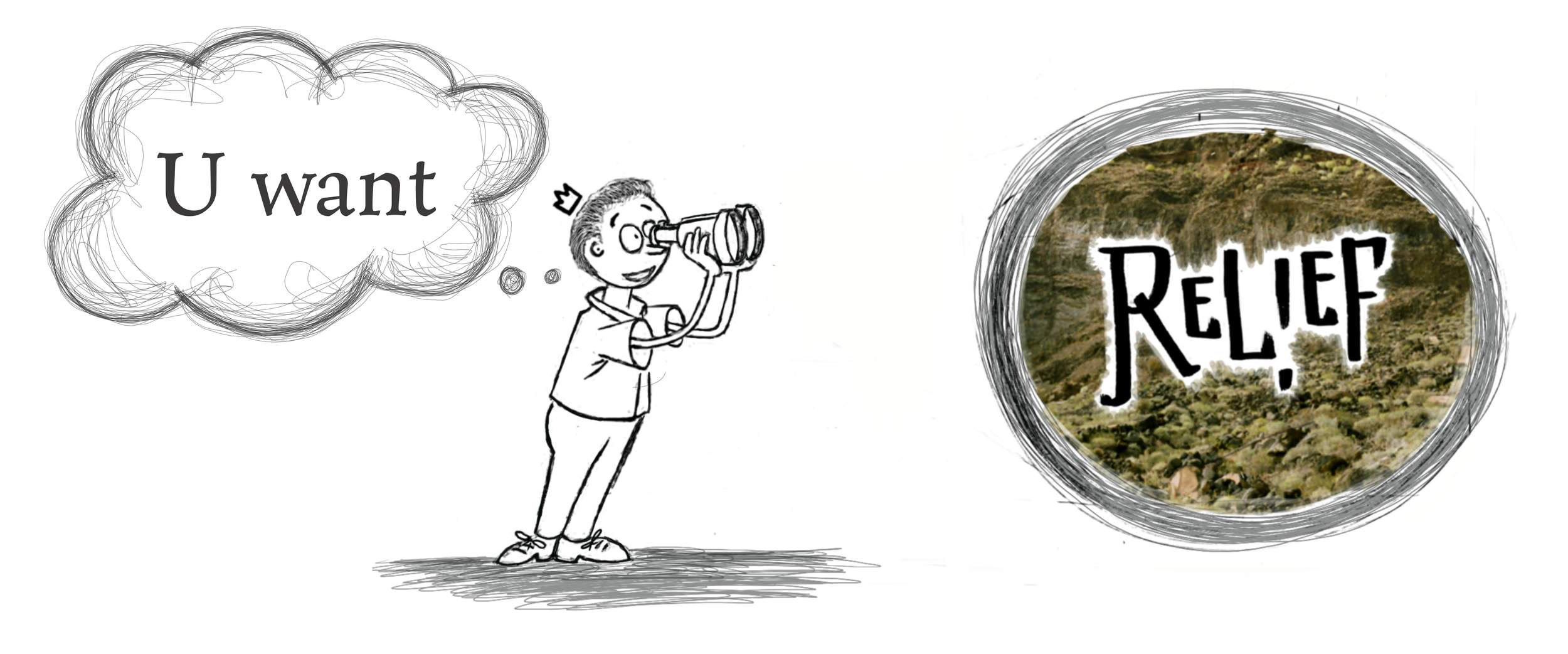
BAREFOOTING: HARVARD RESEARCH
Today I received a new pair of shoes.
What do you care?
Well, these are special.
They are Minimalist Shoes!
What?!
They respect the form of our feet
And their sole is only thick enough to protect to us from the crap of the streets.
I really got into bare-footing a few years ago, when I found out about Daniel Lieberman from Harvard.
What does his research tell us?
Between 30 and 75% of runners injure themselves per year.
And most of them wear high tech sneakers.
Sneakers that were no where to be seen before the 1970s.
Before we as Humans would run in very basic shoes.
Just look at the Converse All-Stars.
As simple as it can get.
Worn in the NBA back in the day.
So he decided to compare people that ran with running shoes with people who had never ran with any.
He had them run on a special tread mill that measured the impact of their gait.
It turned out 70% of runners with shoes, landed with their heel first.
Which caused an important impact.
So his first hypothesis was that a heel strike contributes to injuries.
On the other hand, bare footers, landed on their midfoot or forefoot.
Which essentially had no impact transition!
The impact is much softer.
We use our feet, knees and hips as a natural spring.
So he believes a lower impact force lowers the rates of injuries.
A lot more research has to be done.
But this is very promising.
So what are the advantages:
-Stronger Feet
-Less Energy Consumption
-Feels Good :)
Disadvantages:
-Takes time to adapt (a few months)
-Risk cutting yourself bare-foot.
If you want go minimalist or barefoot, a few recommendations.
Take it slow!
If you feel pain, stop and rest (see your health professional if necessary)
Always stretch, calves and hamstrings especially.
As a musicians why would you want to go minimalist?
Stronger feet means a more stable foundation (your legs)
From a good foundation your spine is straight.
So your shoulders are well positioned.
To free the movements of your hands.
And let you do your magic
:D
If you have any questions about this drop me a line
mspencer@rockyourcortex.com
PS: Go have a look at the making of this skribe.
To present the results of our research on pains in musicians, we decided to make this little video.
Hope you like it.
Research shows that between 79 and 97% of musicians suffer from pains. Playing hours and hours everyday for years is a major cause. But a musicians’ lifestyle with so many travels as well.
From the 14th of February to the 21st of March 2012 We conducted 2 epidemiological studies. A classic paper version in Polish and a web version in both French and Polish.
Hypothesis number 1: The more travelling the more pain in musicians. Hypothesis number 2: Approprate Physical Preparation diminishes pain in musicians This was the 1st time these subjects were researched.
Starting out, our goals were:
-Have a better understanding of musicians’ problems and their relation to travels.
-Propose possible solutions
-Talk about this with the music world.
From 3 Superior Conservatoires in Poland We had 235 students fill in the questionnaire. After checking for errors we ended up with 209.
After entering our questionnaire into Google Docs We spread it through our different social media channels. Digital word of mouth got us 186 filled-in surveys. From Professionals, non-professionals and students
When we analyzed our data the general results were similar in both our studies and comparable to previous research.
91% of all musicians complained of pain in the past 12 months.
The areas they complained the most about: Neck, Upper back, Lower back, Shoulder and Hand.These regions are related to a musicians’ posture and the use of his arms and hands.
The 3 areas that make a musician diminish or stop playing his instrument are 1st Wrist and Hand 2nd Neck 3rd Fingers These regions are very worrisome for a musician
The specific results were more surprising! We only found 1 relationship between pain and traveling.
The more a musician does long tours, the more time he has to stop playing.
The more successful a musician the more he tours. So if touring a lot can cause them to stop playing. It’s important they learn to prevent these problems.
Practicing a sport is good. We discovered a tendency that it diminishes pain and the number of musicians having to stop playing. Musicians that practice racket sports and surprisingly swimming and bike ridding have more pains. The ones that practice ball games and weight lifting less pain! Philippe Chamagne suggested that the HOW you practice a sport is more important than WHAT sport you practice.
One of our most important results: Appropriate physical preparation helps musicians avoid pain.
All these results are important for Performing Arts Medicine. Which is a growing field, so the more research we have, the better we can help musicians get rid of their pains and prevent them!
As a musician it’s important to understand the basics of how the body works. Our line of gravity should go through our ears, shoulders, pelvis, knees and feet. And our head, shoulders and pelvis should be parallel to the ground.
This good posture will correctly position our shoulders. That lifts our arm, who frees our fore-arm to position our hand and fingers. So our movements are precise, rapid and more endurent.
The nerves going to our head and arms leave the spine in the neck. A bad posture will cause stress and tension there. So the nerves won’t control the muscles as well Our movements will be less precise, slower and less endurent.
To avoid this we need to understand 2 key aspects. 1st our support, standing on our feet, sitting on our feet and pelvis. 2nd, our head moves independently from our body.
These are the basic principles for an appropriate physical preparation 1 piece of our Health Pie. The other ones? Rest, Hygiene, Balanced Biomechanics and a good diet These 5 aspects are important to keep our bodies functioning at their best.
And we need to fit them into a musicians nomadic lifestyle. So they fully nurture their best body-mind relationship to express their creative soul.
That’s what we do! In our office in Warsaw and on tour. Isia as a musicians’ physical and mental preparator and me as a chiropractor specialized for musicians.
We love talking about this. So send us an email. contact@musicalstate.pl for Isia Smieszchalska mspencer@rockyourcortex.com for me, Mathieu Spencer
Biomechanics Law: Updating!

Does our body move like a machine?!
That’s the question The Movement Man, Stephen Braybrook, has been asking himself.
So he dug deep.
And uncovered that the law of biomechanics is over 300 years old and is based on the lever system!
A system he believes to have 4 important problems:
-It considers each joint as isolated
-It is energy hungry
-It looks at our gait as an inverted pendulum
-It considers our body as a static entity!
An alarming fact, this system is the foundation for Newton and Hooke’s laws of biomechanics!
When we start to look at how a biological system works.
We understand that we need an update!
These days, many specialist are paving the way.
Looking at the body as a whole.
1 entity.
If something happens at one end.
It will have a consequence somewhere else.
That is why as a chiropractor I look at a patient as a whole.
Why is that right hand shaking?
What is going on in her right elbow? her right shoulder? her spine? her pelvis? her knees and all the way down to the patient’s feet!
To see the pattern.
Where is there an imbalance?
When we start to look at biomechanics in a new light, it makes so much sense to update the Biomechanics Law.
That is the path a few of us have chosen.
Thank you Stephen for helping me in the process.
Skribes I made during TEDxWarsaw.
This was my first experience in these conditions.
Making skribes that would be exposed right after they were made.
It was really interesting to see how I evolved between the first one and the last one.
I saw my progression during the day!
Expand your Comfort Zone to Design a Better World

How can we make a better world?
A lot of wise sayings tell us
Become a better person.
How do we do that?!
Last week, I spent all day skribing TEDxWarsaw
Poke Your Comfort Zone
Common ideas came from the different speakers.
So I decided to make a remix!
The most important
Our comfort zone is a self created mental barrier.
“Oh, I’m too old to learn a new language.”
“Yeah I don’t have the right genes to sing.”
That’s all bull shit.
And the day you take the decision to expand it.
You will rock your world!
For me Jonathan MacDonald nailed it
He has 3 methods to deal with the unknown.
Serendipity, Experience and Sharing.
Get lost!
Explore the world
Research.
Dive deep into your passions.
What for?
No idea for the moment
But you’ll get LUCKY!
That’s what they are doing over at CERN.
Smashing protons together at incredible speeds.
And they don’t know what the results
Or practical uses will be
Yet!
Best way for this to happen?
Follow your passions
It will give all the motivation you need
To become an adventurer
A designer of your own life.
The learning curve will make you humble.
Understand that what’s important
Generosity of Spirit!
Spirit
That’s the fuel all great stories.
And you have one.
Share it!
Civilization is based on exchange.
Human interactions
It’ll make you happier
Your tribes will give you courage to make life decisions.
To listen to your heart
And dream of the possible outcomes!
Technology’s exponential growth
Makes all this easier.
Our gadgets are becoming an extension of ourselves.
With the data stored in the cloud.
This mysterious place
Where only the few have access
Facebook, Google, Amazon…
Could it be a trap?
Free services in exchange of what?
Our privacy
Our freedom
Time will tell
So beware
A positive aspect
Our global nervous system is maturing
Becoming more tangible.
Real
Feedback loops
To understand SpaceShip Earth
A conclusion?
We should get lost in our personal adventures
Share our stories with the world
The tools are at our fingertips
So we can design a better world
Maybe